
Trusted ERP Solutions Provider To Small, Medium and Enterprises


Saeeda Riaz – Partner,
AGN IT Services LLC | Strategic IT Partner of 10+ Enterprises
I hope you find this blog post insightful. If you’d like our team to handle technology in your business and bring the best ROI, click here.
I hope you find this blog post insightful. If you’d like our team to handle technology in your business and bring the best ROI, click here.
ERP for Garment & Apparel Manufacturing, Boosting Efficiency & Reducing Waste
Why ERP Matters in the Garment Industry
The garment and apparel industry is one of the most dynamic sectors in manufacturing. From handling seasonal demand to managing complex supply chains, apparel businesses face challenges that require more than spreadsheets or outdated systems.
This is where ERP software for garment manufacturing companies comes into play. By integrating production, inventory, finance, and sales into a single, streamlined platform, ERP enables manufacturers to run their operations efficiently and minimize waste.
In fact, ERP is no longer a luxury—it has become a necessity for companies that want to survive in today’s competitive market. Whether you run a small garment unit or a large apparel brand, the right ERP solution can help you optimize resources, cut costs, and deliver products faster.
The Challenges in Garment & Apparel Manufacturing
Running a garment factory is no easy task. Here are some of the common challenges manufacturers face daily:
- High-volume production with low margins: Garment businesses often deal with bulk orders, where cost efficiency is critical.
- Fast-changing fashion trends: Designs change quickly, and manufacturers need agile systems to keep up.
- Complex supply chains: From fabric sourcing to final stitching, multiple vendors and stages must be tracked.
- Inventory management issues: Overstocking leads to waste, while understocking causes delays.
- Quality control: Ensuring consistent quality across large batches is a constant challenge.
- Compliance and sustainability: Meeting labor, environmental, and safety standards is
Without the right system, these challenges lead to missed deadlines, higher costs, and dissatisfied customers.
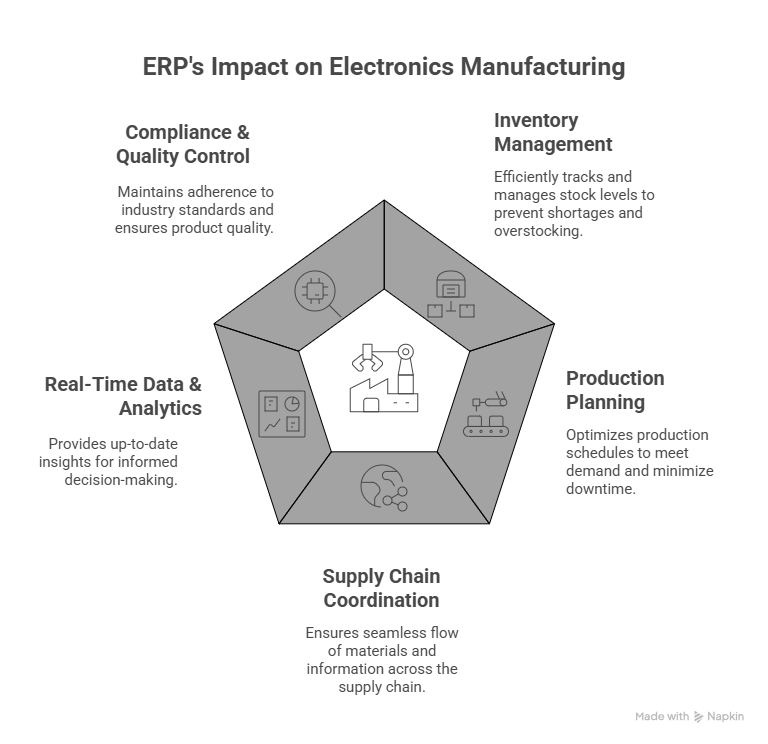
How ERP Software Helps Garment Manufacturers
Implementing an ERP solution for the manufacturing industry transforms how garment businesses operate. Here’s how it makes a difference:
- Real-time visibility: Track everything from raw fabric purchases to finished garments in one system.
- Improved efficiency: Automates repetitive tasks like purchase orders, invoicing, and stock updates.
- Reduced waste: Monitors fabric usage, helps with precise cutting, and prevents overproduction.
- Better planning: Predicts demand, manages seasonal spikes, and ensures timely deliveries.
- Stronger collaboration: Connects departments like design, production, sales, and finance on a single platform.
- Data-driven decisions: Provides insights into costs, profitability, and performance.
In short, ERP software gives garment manufacturers control over their operations while minimizing losses.
Key Features of ERP for Garment & Apparel Manufacturing
When choosing ERP software for a garment manufacturing company, here are the must-have features:
1. Production Planning & Control
ERP helps plan cutting, stitching, dyeing, and finishing schedules with precision. It ensures that resources are allocated correctly and production stays on track.
2. Inventory & Fabric Management
ERP tracks fabric rolls, trims, accessories, and finished goods in real time. It prevents wastage and ensures raw materials are available when needed.
3. Order & Style Management
Garment manufacturing is all about styles, sizes, and colors. ERP allows easy handling of multiple styles and variations within one order.
4. Quality Management
The system monitors each stage of production, reducing defects and ensuring garments meet industry standards.
5. Supply Chain Integration
ERP connects suppliers, vendors, and distributors, ensuring smooth coordination across the supply chain.
6. Compliance & Sustainability Tracking
Helps companies meet international labor laws, safety guidelines, and sustainability goals.
7. Financial & Costing Control
Tracks material costs, labor expenses, and overheads to ensure profitability on each order.
Top ERP Solutions for Garment Manufacturers in 2025
Here are some leading ERP solutions for the manufacturing industry that garment companies can benefit from:
1. SAP S/4HANA
A powerful ERP for large apparel enterprises, offering advanced supply chain and global compliance tools.
2. Odoo
An open-source solution perfect for small and medium-sized garment factories. It’s modular, affordable, and easy to customize.
3. Microsoft Dynamics 365
A great fit for apparel businesses that want AI-powered insights, seamless integrations, and strong supply chain management.
4. Zoho ERP (Zoho Creator + Zoho One)
Best for small garment manufacturers looking for simplicity, affordability, and mobile access.
5. Oracle NetSuite
A cloud-first ERP offering real-time global operations and scalability for growing apparel brands.
Implementing ERP in Garment Manufacturing | Best Practices
Introducing an ERP system in a garment factory can feel overwhelming. But with the right approach, it becomes a smooth transition.
- Assess your needs:Define what challenges you want ERP to solve (inventory, costing, planning, etc.).
- Choose the right ERP: Select a solution that fits your company’s size, budget, and industry requirements.
- Train your team: ERP works only if employees know how to use it effectively.
- Start small, scale gradually:Begin with core modules (production, inventory) and add more over time.
- Work with a reliable vendor: Implementation partners can customize the system to your specific garment processes.
Conclusion
The garment and apparel industry is highly competitive, and success depends on efficiency, speed, and quality. By adopting an ERP software for garment manufacturing company, businesses can reduce waste, optimize resources, and respond quickly to changing market demands.
Whether you’re a small apparel unit or a global fashion brand, the right ERP solution for manufacturing industry ensures your operations run smoothly from fabric to finished product.
FAQs
ERP integrates production, inventory, finance, and supply chain into one system. For garment companies, it reduces fabric waste, improves efficiency, streamlines orders, and ensures quality control. This makes it easier to meet deadlines, manage costs, and stay competitive in the fast-changing apparel market.
Small garment businesses benefit most from affordable, flexible ERP solutions like Odoo and Zoho ERP. These systems are easy to implement, scalable, and budget-friendly. They help manage production, inventory, and sales without the high costs of enterprise systems, making them ideal for growing apparel companies.
Yes, ERP supports sustainability by tracking fabric usage, reducing waste, and promoting efficient resource allocation. It also helps manufacturers comply with eco-friendly standards and certifications, making operations more transparent. By minimizing overproduction and improving supply chain efficiency, ERP enables garment companies to balance profitability with environmental responsibility.
Implementation usually takes 3–6 months, depending on company size, complexity, and customization. Small factories with straightforward needs may finish sooner, while larger apparel businesses with multiple units and suppliers may take longer. Proper planning, employee training, and vendor support are key to a smooth ERP rollout.
ERP costs vary widely. Cloud-based systems like Odoo and Zoho are affordable for small businesses, while enterprise solutions such as SAP or Oracle NetSuite are more costly but offer advanced features for global operations. Overall, ERP is an investment that pays off through efficiency, reduced waste, and higher profitability.
Saeeda Riaz
Partner at AGN IT Services LLC | Strategic IT Partner of 10+ Enterprises
Saeeda Riaz is a seasoned IT consultant with over 23 years of experience in delivering innovative technology solutions to businesses across various industries. As the driving force behind a leading IT solutions company, she specializes in digital transformation, business automation, and software development. Her strategic vision and hands-on expertise help organizations streamline operations, enhance efficiency, and stay ahead in the digital landscape.
Connect on LinkedInContact us for IT Solutions
 English