
Trusted ERP Solutions Provider To Small, Medium and Enterprises

What are different warehouse management systems

Saeeda Riaz – Partner,
AGN IT Services LLC | Strategic IT Partner of 10+ Enterprises
I hope you find this blog post insightful. If you’d like our team to handle technology in your business and bring the best ROI, click here.
I hope you find this blog post insightful. If you’d like our team to handle technology in your business and bring the best ROI, click here.
Running a warehouse without a system is like trying to run a school without a timetable chaos, confusion, and a lot of wasted time. In the fast-paced world of logistics, manufacturing, and e-commerce, warehouse management systems(WMS) have become essential tools for keeping operations smooth, accurate, and efficient
A WMS is specialized software that helps businesses control every stage of warehouse operations, from receiving stock to shipping orders. It acts like the central brain of a warehouse, ensuring products are stored correctly, workers know what to do, and goods are shipped on time.
In this comprehensive guide, we’ll break down:
Different Types of Warehouse Management Systems
Here’s a deep dive into the four main types of WMS and how they work.
A. Standalone Warehouse Management Systems
A standalone WMS is software dedicated solely to warehouse functions. It’s ideal for companies that need advanced warehouse capabilities but don’t require full business integration.
Key Functions:
- Barcode and RFID scanning for accurate inventory
- Order picking and packing guidance
- Stock level alerts
- Shipping label creation
Example:
A small electronics retailer in Dubai used a standalone WMS to track over 3,000 SKUs. Before WMS, they lost around 5% of stock each year due to errors. After implementing the system, stock discrepancies dropped to less than 1%.
Pros:
- Cost-effective for small to mid-sized businesses
- Easy to deploy and learn
- Focused on warehouse performance
Cons:
- Limited integration with other systems
- Manual data entry may still be needed for accounting or sales platforms
B. ERP-Integrated WMS
ERP (Enterprise Resource Planning) systems manage everything from sales to HR. An ERP with a built-in warehouse management module combines warehouse data with the rest of the business.
Key Functions:
- Unified database for sales, finance, and warehouse data
- Real-time updates across all departments
- Improved decision-making through shared information
Example:
A large UAE-based retail chain integrated its WMS with ERP, enabling automatic updates to inventory after every sale. This reduced out-of-stock situations by 20% and improved customer satisfaction.
Pros:
- Eliminates duplicate data entry
- Improves communication between departments
- Centralized reporting
Cons:
- Higher cost compared to standalone WMS
- Requires more setup time and staff training

C. Cloud-Based Warehouse Management Systems
Cloud-based WMS is hosted online, meaning no on-site servers are required. Businesses pay a subscription fee and can access the system from anywhere.
Key Functions:
- Remote access from any device
- Real-time updates for multiple warehouse locations
- Automatic system upgrades
Example:
A logistics company with warehouses in Dubai, Abu Dhabi, and Sharjah uses a cloud WMS to manage all locations from a single dashboard. Managers can log in remotely and monitor operations in real time.
Pros:
- Lower upfront investment
- Easy scalability
- Accessible from anywhere
Cons:
- Dependent on internet connectivity
- Data privacy depends on the cloud provider
D. Supply Chain Execution (SCE) WMS
SCE WMS is part of a larger supply chain management ERP suite, handling everything from warehouse operations to transportation and supplier management.
Key Functions:
- Full supply chain visibility
- Predictive analytics for demand forecasting
- Integration with shipping carriers and suppliers
Example:
A multinational FMCG company in Dubai implemented an SCE WMS, allowing them to coordinate suppliers in Asia, manufacturers in Europe, and customers in the Middle East from one system.
Pros:
- Ideal for complex, global supply chains
- Reduces bottlenecks and delays
- Offers advanced analytics and forecasting
Cons:
- Expensive and complex to implement
- Requires specialized staff training
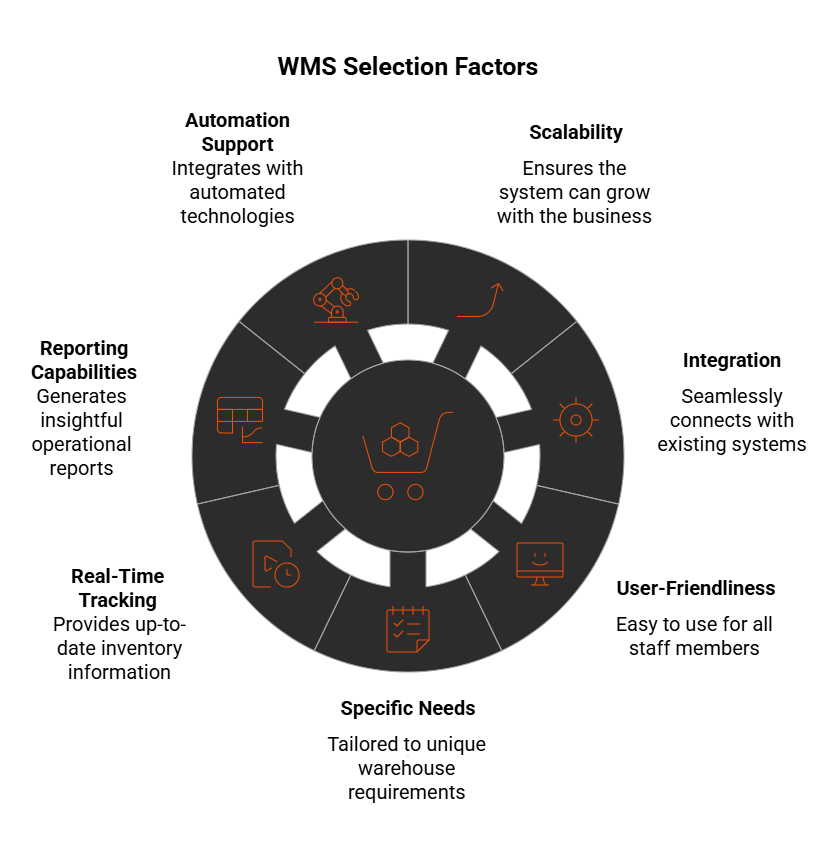
How to Choose the Right Warehouse Management System
When deciding on a WMS, consider:
- Business Size and Complexity: A small warehouse may not need a full ERP-integrated system.
- Integration Needs: Does it need to connect with your e-commerce, accounting, or CRM software?
- Budget: Compare upfront costs, subscription fees, and long-term ROI.
- Scalability: Choose a system that can grow with your business.
- Support and Training: Ensure the vendor offers ongoing assistance.
Benefits of Implementing Warehouse Management Systems
- Inventory Accuracy: Reduce human errors with barcode scanning and automated stock updates.
- Faster Order Fulfillment: Optimized picking routes speed up processing.
- Reduced Costs: Lower labor costs and minimize overstock.
- Better Customer Service: Deliver on time and improve reliability.
- Data Insights: Make informed decisions with real-time analytics.
The Future of Warehouse Management Systems
Technology is transforming warehouses into smarter, more efficient operations. Emerging trends include:
- AI & Machine Learning: Predict stock needs and optimize workflows.
- Robotic Automation: Robots handle picking, packing, and sorting.
- IoT Devices: Smart shelves send alerts when stock runs low.
- Blockchain: Secure, transparent tracking across supply chains.
Final Thoughts
Warehouse management systemsare no longer optional — they’re a must-have for businesses that want efficiency, accuracy, and competitive advantage. From small retailers to global corporations, the right WMS can transform operations, save money, and keep customers happy.
For IT companies, offering WMS solutions means tapping into a growing market where technology directly impacts profitability. As e-commerce and global trade expand, so does the demand for advanced, integrated, and cloud-based WMS solutions.
Frequently Asked Questions (FAQs)
A Warehouse Management System (WMS) is software that helps manage and streamline warehouse operations, including inventory control, order fulfillment, shipping, and receiving. It enables real-time tracking and automates key tasks, ensuring better organization, reduced errors, and increased efficiency.
A WMS is critical because it helps businesses manage high volumes of inventory and orders, reducing human error, improving accuracy, and speeding up fulfillment times. It minimizes risks like stock loss, late deliveries, and overstocking, which can lead to higher operational costs and customer dissatisfaction.
Cloud-based WMS offers the flexibility to access the system remotely from any device, ensuring real-time updates for warehouses across different locations. It typically involves lower upfront costs, easy scalability, and automatic system upgrades.
SCE WMS is a part of a broader supply chain suite, covering not just warehouse operations but also transportation, supplier management, and demand forecasting. It provides comprehensive visibility across the supply chain, which is especially useful for global operations.
No, WMS solutions are suitable for businesses of all sizes. While large corporations benefit from more complex systems like ERP-integrated or SCE WMS, smaller businesses can opt for standalone or cloud-based systems tailored to their specific needs and budget.
By ensuring timely deliveries, reducing stock discrepancies, and providing real-time tracking information, a WMS enhances the overall customer experience, leading to greater satisfaction and loyalty.
Yes, many WMS solutions, especially cloud-based or ERP-integrated systems, allow businesses to manage multiple warehouse locations from a single interface, providing real-time updates and centralized control.
Saeeda Riaz
Partner at AGN IT Services LLC | Strategic IT Partner of 10+ Enterprises
Saeeda Riaz is a seasoned IT consultant with over 23 years of experience in delivering innovative technology solutions to businesses across various industries. As the driving force behind a leading IT solutions company, she specializes in digital transformation, business automation, and software development. Her strategic vision and hands-on expertise help organizations streamline operations, enhance efficiency, and stay ahead in the digital landscape.
Connect on LinkedInContact us for IT Solutions
 English