
Trusted ERP Solutions Provider To Small, Medium and Large Enterprises


Saeeda Riaz – Partner,
AGN IT Services LLC | Strategic IT Partner of 10+ Enterprises
I hope you find this blog post insightful. If you’d like our team to handle technology in your business and bring the best ROI, click here.
I hope you find this blog post insightful. If you’d like our team to handle technology in your business and bring the best ROI, click here.
The 10 Best ERP Solutions for Manufacturing Companies in 2025
Best ERP for manufacturing in 2025 and 2026 This guide explores the top 10 ERP solutions, like SAP, Odoo, Microsoft Dynamics, Zoho, and more, that help manufacturers streamline operations, cut costs, and stay competitive. Discover which ERP software fits your company’s size, industry, and goals.
1. SAP S/4HANA
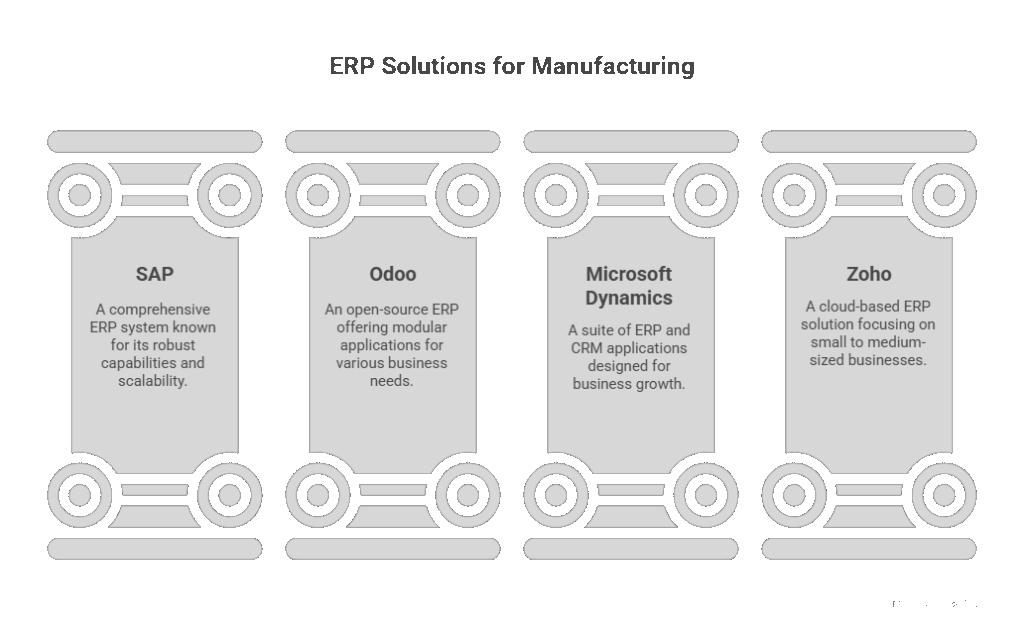
When people think of ERP, SAP is often the first name that comes to mind. SAP S/4HANA is a powerhouse designed for large enterprises, but it’s also adaptable for mid-sized manufacturers.
Why it’s great for manufacturing:
- Real-time data processing with in-memory computing
- Advanced production planning and scheduling
- End-to-end supply chain visibility
- Strong compliance and quality control features
Who should use it?
Manufacturers with complex processes—like automotive, electronics, or chemical industries—that need a robust solution.
Pros:
- Extremely scalable
- Supports global operations
- Rich industry-specific modules
Cons:
- Expensive for small companies
- Requires technical expertise for implementation
SAP remains one of the best ERP software for manufacturing if your goal is to future-proof your operations and handle complex global workflows.
2. Odoo
If SAP feels too heavy, Odoo offers a flexible, open-source alternative that’s highly popular among small to mid-sized manufacturers.
Why it’s great for manufacturing:
- Modular system (you can start small and add apps as you grow)
- Strong production planning and inventory control features
- Integration with sales, CRM, and HR modules
- Cloud and on-premise options
Who should use it?
Small and medium-sized manufacturers who want affordability without losing key features.
Pros:
- Cost-effective and highly customizable
- Easy to implement compared to traditional ERP
- Open-source flexibility
Cons:
- Requires customization for advanced manufacturing needs
- Community edition has fewer features compared to paid versions
If you’re a growing business looking for the best ERP for manufacturing that won’t break the bank, Odoo is an excellent choice.
3. Microsoft Dynamics 365
Microsoft Dynamics 365 combines ERP and CRM capabilities, making it one of the most versatile tools for manufacturers in 2025.
Why it’s great for manufacturing:
- Seamless integration with Microsoft products like Teams, Office, and Power BI
- Predictive insights powered by AI and machine learning
- Advanced supply chain and warehouse management
- Strong financial and customer relationship management
Who should use it?
Manufacturers who already use Microsoft tools and want a seamless integration with ERP.
Pros:
- User-friendly interface
- Cloud-based with strong security features
- Great for medium to large manufacturers
Cons:
- Pricing can add up quickly
- Customization requires expert support
If collaboration and data insights are top priorities, Microsoft Dynamics 365 stands out as one of the best ERP software for manufacturing today.
4. Zoho ERP (Zoho Creator + Zoho One)
Zoho might be best known for its CRM and productivity tools, but its ERP solutions—especially with Zoho Creator—are gaining traction in manufacturing.
Why it’s great for manufacturing:
- Highly customizable workflows for production, inventory, and supply chain
- Affordable pricing for small and mid-sized businesses
- Integration with Zoho’s wide range of apps (CRM, HR, accounting)
- Cloud-based and mobile-friendly
Who should use it?
Small manufacturers who want an easy-to-use ERP without the complexity of big enterprise systems.
Pros:
- Simple and affordable
- Mobile access for field teams
- Customizable dashboards and automation
Cons:
- Not as feature-rich as SAP, Odoo or Microsoft Dynamics
Zoho is a smart option for businesses that want the best ERP for manufacturing without the high costs or steep learning curve.
5. Oracle NetSuite
Oracle NetSuite is a cloud-based ERP that has become a go-to solution for manufacturers looking for scalability and global reach.
Why it’s great for manufacturing:
- Cloud-first architecture with easy access anywhere
- Strong financial and supply chain management features
- Real-time visibility into production and inventory
- Industry-specific add-ons for manufacturers
Who should use it?
Medium to large manufacturers with global operations.
Pros:
- Excellent for multi-location businesses
- Regular updates and strong support
- Scalable for growth
Cons:
- It can be expensive for small companies
- Implementation takes time.
NetSuite’s strength lies in its all-in-one approach, making it one of the best ERP software for manufacturing in industries that operate across borders.
6. Infor CloudSuite Industrial (SyteLine)
Infor CloudSuite Industrial, also known as SyteLine, is designed specifically for manufacturers. It focuses on streamlining production and supply chain processes while offering deep industry-specific functionalities.
Why it’s great for manufacturing:
- Strong support for discrete and process manufacturing
- Advanced scheduling and planning tools
- Built-in analytics for performance tracking
- Cloud deployment with flexible options
Who should use it?
Mid-sized to large manufacturers that need an ERP tailored to industries like automotive, aerospace, and food processing.
Pros:
- Designed for manufacturing from the ground up
- Industry-specific templates save setup time
- Strong analytics and reporting features
Cons:
- Steeper learning curve compared to simpler ERP systems
- Implementation can be resource-heavy
For manufacturers with unique industry requirements, Infor CloudSuite ranks among the best ERP for manufacturing in 2025.
7. Epicor ERP
Epicor is another ERP system built with manufacturing in mind. It provides end-to-end solutions for managing production, supply chains, finances, and customer relationships.
Why it’s great for manufacturing:
- Powerful production scheduling and shop floor management
- Real-time tracking of inventory and resources
- IoT and Industry 4.0 integration
- Flexible deployment (cloud or on-premise)
Who should use it?
Small to medium manufacturers looking for advanced shop floor management.
Pros:
- Strong manufacturing focus
- Scalable for growing businesses
- Great integration with modern technologies
Cons:
- It can be overwhelming for beginners
- Higher costs compared to entry-level ERP solutions
Epicor is a strong choice for manufacturers who want a modern ERP system built to handle today’s digital manufacturing challenges.
8. SYSPRO
SYSPRO is an ERP solution that has been trusted by manufacturers for decades. Its strength lies in its simplicity and ability to support different types of manufacturing—discrete, process, and mixed-mode.
Why it’s great for manufacturing:
- Strong production control and warehouse management
- Excellent financial management tools
- AI-powered insights for better decision-making
- On-premise, cloud, or hybrid deployment
Who should use it?
Manufacturers who want a reliable and flexible ERP with decades of industry experience.
Pros:
- Easy to use and intuitive
- Strong customer support
- Flexible deployment options
Cons:
- Less advanced compared to SAP or Oracle in large-scale operations
- Limited third-party app ecosystem
If you’re looking for a dependable, industry-proven solution, SYSPRO deserves its place as one of the best ERP software for manufacturing.
9. Plex Manufacturing Cloud
Plex is a cloud-based ERP solution built specifically for manufacturing. It focuses heavily on shop floor control and real-time visibility.
Why it’s great for manufacturing:
- Real-time production tracking and quality management
- Built-in compliance and traceability features
- Designed for the automotive, aerospace, and food industries
- Fully cloud-based with mobile access
Who should use it?
Manufacturers who want real-time shop floor visibility and strong compliance management.
Pros:
- Cloud-first design ensures easy updates
- Excellent for quality- and compliance-heavy industries
- Strong shop floor focus
Cons:
- Less flexibility compared to hybrid systems
- Some users may need time to adapt to its unique interface
If real-time visibility and compliance are your priorities, Plex is one of the best ERP systems for manufacturing companies today.
10. DelmiaWorks (formerly IQMS)
DelmiaWorks, previously known as IQMS, is part of Dassault Systèmes’ suite of solutions. It’s designed for mid-sized manufacturers with a focus on production efficiency.
Why it’s great for manufacturing:
- Real-time monitoring of shop floor operations
- Strong MES (Manufacturing Execution System) integration
- Excellent scheduling and resource planning
- Industry-specific features for plastics, automotive, and medical devices
Who should use it?
Manufacturers who need detailed MES integration alongside ERP.
Pros:
- Real-time data improves decision-making
- Industry-specific functionality
- Integrated ERP + MES system
Cons:
- Best suited for mid-sized companies (not ideal for very small businesses)
- Implementation may require external expertise
For manufacturers seeking a powerful combination of ERP and MES, DelmiaWorks is among the best ERP software for manufacturing in 2025.
How to Choose the Best ERP for Your Manufacturing Company
With so many ERP solutions available, how do you know which one is right for your business? Here are a few tips:
- Define your needs – Do you need a lightweight system for small operations, or a robust one for global supply chains?
- Set your budget – Costs vary widely, from open-source solutions like Odoo to enterprise-level systems like SAP.
- Check industry fit – Some ERP systems are tailored to specific industries (e.g., Plex for automotive).
- Consider scalability – Choose an ERP that grows with your business.
- Look for ease of use – A system only works if your team can actually use it effectively.
Conclusion
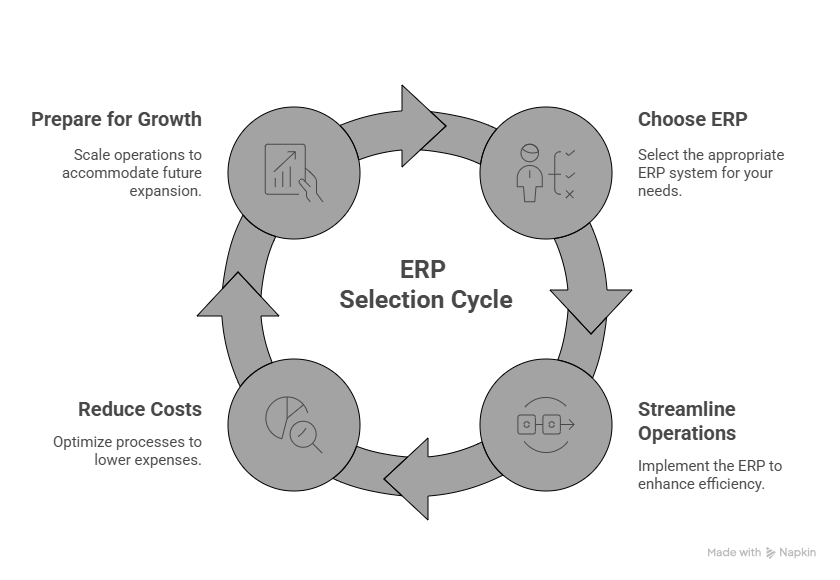
Choosing the right ERP system is one of the most important decisions a manufacturing company can make in 2025. The right ERP helps streamline operations, reduce costs, and prepare your business for future growth.
From SAP’s enterprise power to Odoo’s affordability, and from Plex’s real-time visibility to Microsoft Dynamics’ seamless integration, the options are vast. The key is to match the ERP’s strengths with your company’s needs.
At the end of the day, the best ERP for manufacturing is the one that helps your company work smarter, not harder.
FAQs
SAP S/4HANA, Microsoft Dynamics 365, and Oracle NetSuite are top choices for large enterprises, while Odoo and Zoho are excellent for small to mid-sized manufacturers.
Yes! Even small manufacturers benefit from ERP by improving inventory control, reducing errors, and saving time. Affordable options like Odoo and Zoho make ERP accessible.
SAP S/4HANA, Oracle NetSuite, and Infor CloudSuite are ideal for global operations due to their scalability and multi-location support.
Costs vary—open-source systems like Odoo can be affordable, while enterprise systems like SAP or Oracle may cost thousands per month. Pricing depends on users, features, and customization.
ERP focuses on business-wide management (finance, HR, supply chain), while MES (Manufacturing Execution System) manages shop floor operations in real time. Some solutions, like DelmiaWorks, combine both.
Saeeda Riaz
Partner at AGN IT Services LLC | Strategic IT Partner of 10+ Enterprises
Saeeda Riaz is a seasoned IT consultant with over 23 years of experience in delivering innovative technology solutions to businesses across various industries. As the driving force behind a leading IT solutions company, she specializes in digital transformation, business automation, and software development. Her strategic vision and hands-on expertise help organizations streamline operations, enhance efficiency, and stay ahead in the digital landscape.
Connect on LinkedInContact us for IT Solutions
 English